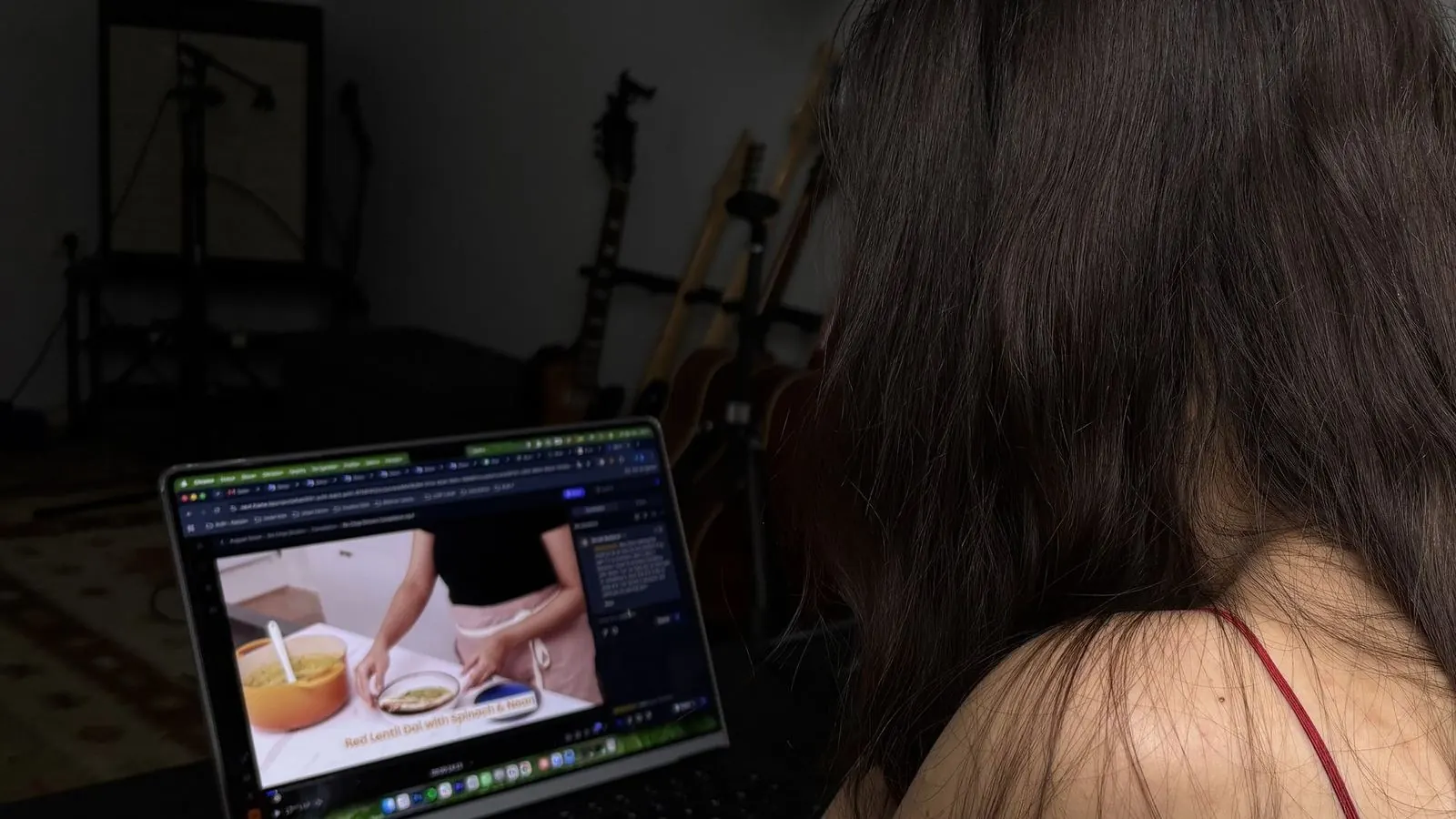
Colour grading
One camera is appointed the reference for the room, and everything else is brought into agreement with it.
The short version
What you get. Matched cameras and a considered look that makes the subject easier to follow.
Is this for you? For mismatched cameras, changing light or footage that needs a coherent finish. Consistently lit footage may need less treatment. Not if you want one preset laid over every video. The look is decided against the footage each time.
What leaves your plate. Camera matching, shot-by-shot adjustments and selective control of exposure, contrast and texture.
Start with the Free Audit.
The decisions a LUT cannot make for you
Match the cameras to a chosen reference
Every partner has a named reference angle. On the lesson channel it is the camera called A; on one recipe channel it is the top angle; on another it is the one labelled Main. Whatever the side and detail cameras were doing, they get matched to that single reference, and so do the graphics sitting over them. Skip this on a three-camera shoot and you deliver three rooms.
The grade is chosen per instructor, per lighting state, per studio
A brand does not get one look. It gets a decision taken against the raw footage in front of you: who is on camera, what the daylight was doing, which room it was. Grading steps travel from a reference project so the grammar stays constant, then every one of them is retuned for the shot. A fixed technical transform for a camera and its log profile can stay constant, but the grade on top of it, the exposure, balance and contrast, is retuned per shot; the same finished look landing twice unaltered is a coincidence rather than a house style.
Light is masked towards whatever the viewer needs to see
In food work, selective adjustments can draw attention to the mixture, the cooking or the finished dish. We use them where they help the image, without making the treatment the subject.
Texture, checked in the delivery
Where texture serves the work, we set it shot by shot and check how it holds up at delivery settings. A complex shot can involve several adjustments, including masked light, a vignette and grain, each chosen for the image.
Three brands, three different angles chosen as the reference
| Lesson channel | the angle named A; other angles and the on-screen invitations matched to it |
|---|---|
| Recipe channel, one | the top angle; blowouts off white surfaces corrected on the sides |
| Recipe channel, two | the angle named Main; its side camera runs darker and gets lifted to meet it |
| Detail camera | requested in log so the grade has latitude, at 4K for reframing headroom |
| Parallel operations, one shot | up to ten |
| Grain | kept, set per shot |
What grading is for
Matching, then looking
We first bring the cameras into agreement, then develop the look. Matching exposure, colour and skin tone gives the grade a consistent starting point.
The surfaces that fight you
White worktops blow out. Side cameras run darker and more contrasted than the one facing the subject. Keys and hands sit in shadow under a lid. Each of those is a known, repeating problem on a given set, which means it gets solved once and then applied, so nobody rediscovers it from scratch every month.
Sometimes the grade exists to hide the shoot
On footage from a working site, the priority may be matching uneven exposure and colour so the clips belong together. Missing highlight detail cannot be assumed recoverable. On generated material, we check plausibility and consistency with the surrounding footage.
Match to the chosen reference, not to the middle, or three cameras average into a fourth room that was never there.
What changes for you
A coherent sequence across cameras and lighting conditions, with the grade supporting the subject and the brand.
Related: Multi-camera editing · Vertical video editing · Tracking and punch-ins · Delivery and export
Send recent videos. We will review the edits and reply with the changes we would prioritise.
Request your Free Audit.
Three fields, and a written reading back.
Your audit usually arrives within three working days. We use your details only to reply to your enquiry.
What you will get
What is working, what could improve and whether we can help.
Two or three priorities, with the reason for each.
A recommended next step, even if that step is not us.
There is no obligation to continue. We only arrange a call if you ask for one.
The work, written up
The case studies keep their dates, sources and limits visible.
See the casework →