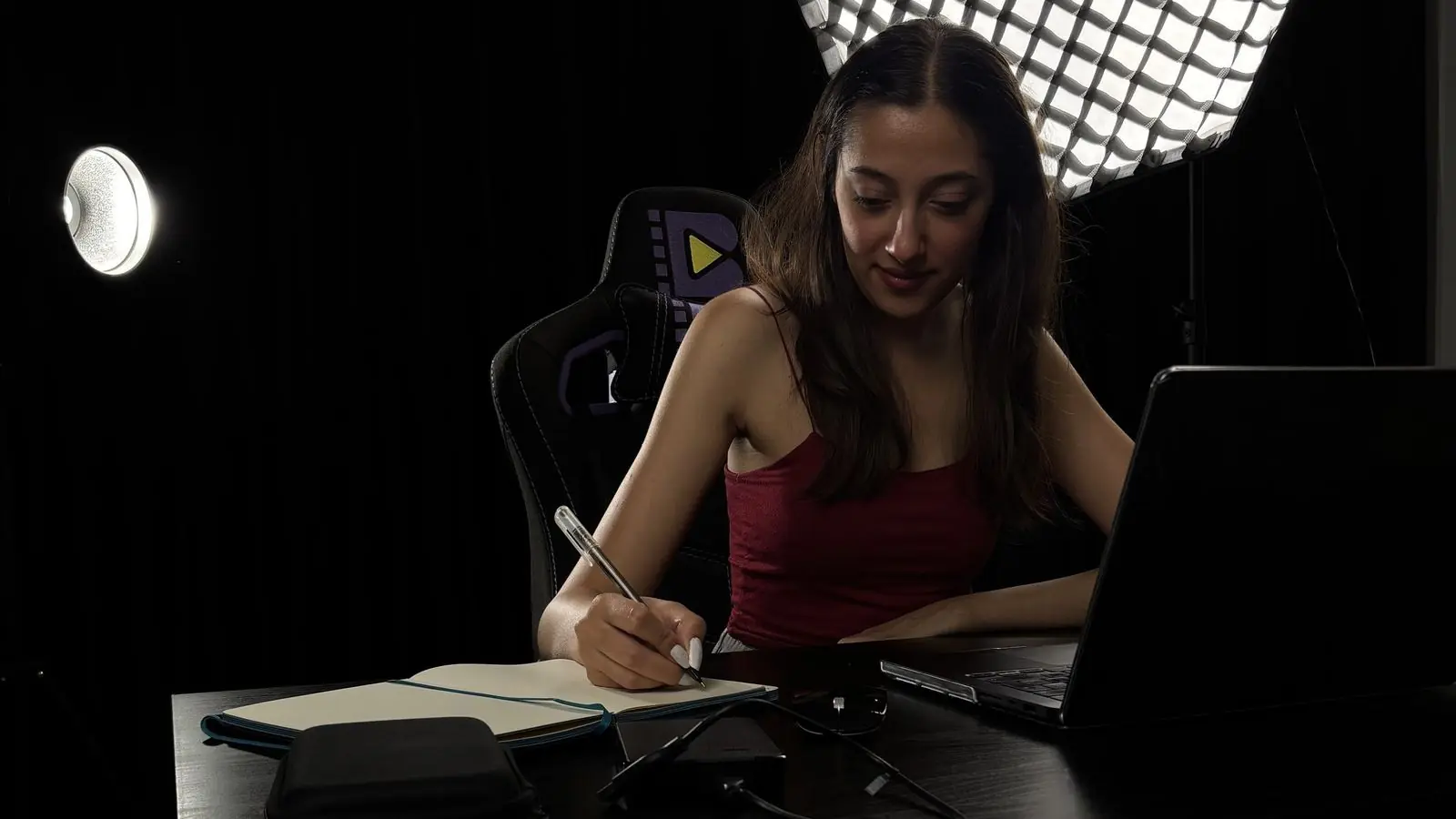
Shoot planning
The document a crew holds on the day, in the order the day happens.
The short version
What starts working. A shoot that produces the material the edit was expecting, in the order it can find it, from a document that still works after everyone who agreed it has moved on.
Is this for you? For shoots with several stages, contributors or continuity needs. The checklist is sized to the job, including a creator filming alone. If tidiness matters more than what already works, this is not for you.
What leaves your plate. The shoot checklist, continuity notes and capture reminders, ordered for use on the day.
Start with the Free Audit.
What the document protects against
The notes are written for somebody who was not on the call
A studio moves. An instructor leaves. A local crew changes over between quarters, and the person who understood the reasoning is suddenly not in the building. Everything here is written so it still works in that situation: each instruction carries its reason, so the next person can adapt it rather than follow it into a room where it no longer applies.
Continuity is the thing that breaks first
The checklist covers what needs checking after a break: wardrobe, framing, light and sound. It includes recurring problems such as hair touching a lavalier, plus the angles and b-roll the edit needs.
Spoken markers on set buy back hours in the edit
At one partner the crew was asked simply to say aloud what was starting before each stage began. Hours of raw footage became searchable overnight. Finding the moment a recipe moves from preparation to cooking stopped being a scrub through a timeline and became a scan of a waveform, which is a real saving created by a free instruction.
Each item addresses a real risk
We add a check when a relevant risk or repeated problem justifies it. We remove or revise one when it no longer helps, keeping essential checks even when the crew is familiar with them.
A shoot day, in writing
What is on a checklist
Technical and artistic notes to follow during the shoot: what to check before resuming, the angles the edit will ask for, the b-roll list, wardrobe and continuity, the microphone and its usual enemies, and where the light has to be. Ordered by when they happen on the day, because that is how a shoot day runs.
How the plan is built
Shoot dates and subjects come to us before the day, so the content plan knows what is arriving and can prioritise properly. Existing footage is reviewed first: what already works is protected, and nothing that is currently succeeding gets thrown away for the sake of a tidier system.
Who holds it on the day
The partner's own crew, or the creator with the camera. Delivered as a document instead of as a conversation, because the value of all this is that it is available at seven in the morning when nobody wants to phone anybody, and it is the same document next quarter.
At the bench
The work, demonstrated
Try a decision from the craft: drag, tap or toggle, then read the trade-off.
These are illustrative models; no partner’s results are shown.
More demonstrations at the bench →A real note still works on the morning its author is asleep in another timezone.
What changes for you
A shoot that produces material the edit was expecting, in the order the edit can find it, with the continuity intact. And a document that keeps working after the people who agreed to it have moved on.
Related: Camera and lighting setup · Microphone setup · Shot and b-roll lists · Remote direction
Send recent videos. We will identify changes to the recording setup that could improve the next shoot.
Request your Free Audit.
Three fields, and a written reading back.
Your audit usually arrives within three working days. We use your details only to reply to your enquiry.
What you will get
What is working, what could improve and whether we can help.
Two or three priorities, with the reason for each.
A recommended next step, even if that step is not us.
There is no obligation to continue. We only arrange a call if you ask for one.
The work, written up
The case studies keep their dates, sources and limits visible.
See the casework →